Choosing between a ball mill, a planetary ball mill and a lab cutting mill comes down to three things: your material, your target fineness and your throughput. Labs regularly budget for a high-energy planetary mill when a cutting mill would prepare the sample faster and with less clean-up. The reverse happens too, particularly when a coarse, uniform cut is mistaken for an analytical powder.
At Green Research Scientific, we begin with the sample and the intended test, then work back to the suitable mechanism. This comparison explains what each mill does, where it falls short and how to select one with confidence. By the end, you should be able to name the right mill for your sample in under five minutes.
Key Takeaways
- A ball mill grinds hard, brittle material by impact and attrition in a rotating drum, usually to tens of microns.
- A planetary ball mill applies much higher energy to small batches and can produce submicron particles under suitable conditions.
- A lab cutting mill uses shear to process soft, fibrous and elastic samples that would wrap, bounce or clog in a ball mill.
- Brittle material generally suits a ball mill, nano-scale work suits a planetary ball mill, and fibrous material suits a lab cutting mill.
- The best choice starts with the sample, required fineness and weekly throughput, not the most impressive specification sheet.
An Overview of the Three Mills
The same word, “milling”, covers very different actions.
A ball mill breaks particles through repeated impact. A planetary ball mill intensifies that impact inside small jars. A lab cutting mill reduces size through controlled cutting. Materials behave differently under impact and cutting forces, so the milling method needs to match their properties.
| Ball mill | Planetary ball mill | Lab cutting mill | |
| Mechanism | Impact and attrition in a rotating drum | High-energy impact from counter-rotating jars | Shear between rotor knives and fixed blades |
| Typical scale | Benchtop laboratory to industrial plant | Laboratory, small-batch sample preparation | Laboratory batch or continuous feed |
| Best materials | Hard, brittle ore, mineral and ceramic | Hard, brittle materials; selected dry or wet samples | Soft, fibrous and elastic plastics, biomass and plant matter |
| Usual final fineness | Tens of microns | Below 1 µm, potentially approaching 100 nm for suitable samples | Millimetres down to a few hundred µm |
| Indicative Singapore budget* | SGD 2,000 to 25,000 | SGD 5,000 to 30,000 | SGD 5,000 to 20,000 |
| Watch out for | Noise, slower runs and media wear | Small volume and heat build-up | Not designed for hard, brittle material |
Indicative equipment bands only. Final pricing varies by capacity, accessories, jar or rotor material, safety options and installation requirements. Confirm the current configuration and quotation before budgeting.
How Each Mill Grinds
The mechanism is the quickest way to understand why one mill succeeds where another fails.
How does a ball mill work
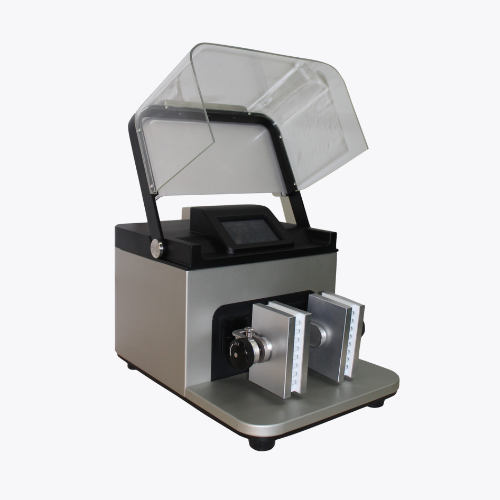
A ball mill is a rotating chamber partly filled with steel, ceramic or other grinding media. As it turns, the media lifts and cascades, crushing and rubbing the sample against the chamber wall. This impact-and-attrition action suits hard, brittle material that fractures rather than deforms. It can run dry or wet and is useful when a lab needs a practical powder volume rather than nano-scale size.
How a planetary ball mill works
In a planetary ball mill, sealed jars rotate around their own axes while orbiting on a rotating sun wheel. This opposing movement sends balls rapidly across the jar, creating far more energetic impacts than a standard drum. It can reduce suitable samples to submicron size and, under the right protocol, towards the nanometre range. Small jars and heat during long runs make it a precision tool, not a bulk-production machine.
How a lab cutting mill works
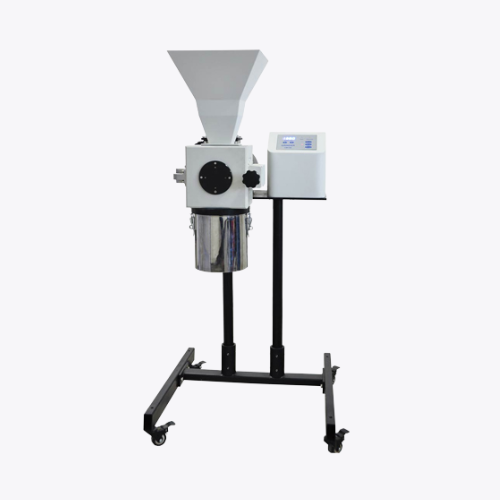
A lab cutting mill uses rotor knives that pass close to fixed blades in a scissor-like action. Material remains in the chamber until it passes a bottom sieve, which largely sets the output size. This suits plant tissue, packaging, polymers, rubber and cable insulation, all of which may flex or wrap around grinding media instead of fracturing. It cannot replace an impact mill for hard mineral or ceramic samples.
A Three-Step Check Before You Choose
At Green Research Scientific, we approach a milling enquiry sample first and catalogue second. The MFT Check is a simple way to make the same decision before comparing models.
M is for Material
Start with physical behaviour, not the label. Hard, brittle samples usually fracture under impact. Soft, fibrous, flexible or rubbery samples need shearing. Mixed samples may need two stages.
F is for Fineness
Ask what the method actually needs. XRF and XRD preparation often needs a fine, homogeneous powder, while screening may need a consistent 0.5 mm to 1 mm cut. Over-milling adds heat, cleaning and contamination risk.
T is for Throughput
Define volume per run and runs per week. A planetary mill may be excellent for a small research sample but impractical for repeated QC work. Include loading, cleaning and cooling time, not only jar volume.
| MFT answer | Likely choice | Why |
| Hard, brittle material; practical lab quantity; micron-range target | Ball mill | Durable impact grinding with more useful batch capacity |
| Hard, brittle material; very fine analytical powder; small batch | Planetary ball mill | Higher energy supports submicron reduction under the right conditions |
| Fibrous, soft or elastic material; controlled cut required | Lab cutting mill | Knife shear reduces the sample without relying on fracture |
| Bulky fibrous sample followed by fine analysis | Cutting mill, then planetary mill | Pre-cutting makes a representative subsample possible before fine milling |
Which Mill Handles Your Sample
Material behaviour matters more than the category printed on the sample bag. The matrix below is a starting point, not a substitute for a trial on the actual material.
| Sample | Ball mill | Planetary ball mill | Lab cutting mill |
| Ore, mineral or ceramic | Yes | Yes, for small amounts | No |
| Plant tissue, biomass or spices | Poor | Possible for a small prepared subsample | Yes |
| Plastics, rubber or polymers | Usually no | Usually poor without special preparation | Yes |
| Battery cathode powders | Yes | Yes, where finer processing is needed | No |
| RoHS and WEEE e-waste | No | Not usually the first step | Yes |
| Pharmaceutical powders | Possible | Possible | Case by case |
Elastic plastics may bend, flatten or heat up rather than shatter. Cryogenic pre-treatment can make some polymers brittle enough to mill, but adds handling and safety requirements. Moist samples can clog sieves or compact inside a jar, so they may need drying, cooling or a different route.
For mixed WEEE or e-waste, a cutting mill is usually the better first step because it creates a representative fraction from cable insulation, casings and other heterogeneous material. Preparation must still match the test method.
The Fineness Your Analysis Actually Needs
The right size is the size your analysis can use reliably. More fineness is not automatically more accurate.
For XRF and XRD preparation, a homogeneous micron-level powder is often needed to improve repeatability. A ball mill may be enough for routine work, while a planetary ball mill suits smaller samples requiring higher-energy grinding. NIR moisture or feed analysis may instead need a uniform 0.5 mm to 1 mm cut, making a lab cutting mill the better fit. For bulk preparation of brittle material, a standard ball mill may be sufficient.
Samples That Need Two Mills
Biomass, plant matter and mixed e-waste can be too bulky or fibrous to enter a fine-grinding jar consistently. A lab cutting mill first reduces the whole sample through a specified sieve, making it easier to blend, split and take a representative subsample. A planetary mill can then process that subsample to analytical fineness. Fine-milling an unrepresentative portion only produces a very fine unrepresentative result.
What Spec Sheets Leave Out
Published speed, power and final-fineness figures are useful, but they do not show the daily realities of a lab.
- Noise: A cutting mill at full speed can make normal conversation difficult nearby. Consider where the instrument will sit and when it will run.
- Heat: Long planetary runs can raise jar temperatures. Temperature-sensitive samples may need interval cycles, cooling breaks or a different preparation approach.
- Contamination: Jar and ball material is an analytical decision. Agate may suit trace-element work, tungsten carbide may suit hard samples, and steel is often a practical default. The sample and target analytes decide.
- Cleaning time: For high-turnover QC work, cleaning between samples can affect capacity more than the headline grind time.
The Full Cost of Owning a Mill
Purchase price is only the first cost. Grinding media, jars, blades and sieves wear, while cleaning and documentation take staff time. GMP-regulated work or ISO-aligned quality systems may also need calibration records, service reports and traceability. A mill can outlive the grant that funded it, so spare parts and local service should be available years later. We help laboratories consider lifecycle support, not only the quotation.
Five Questions to Ask Any Supplier
Before comparing quotations, ask questions that reveal whether the proposed configuration fits the real workflow.
- Can you assess or run my actual sample before I commit?
- Which wear parts are likely to need replacement in year one, and what do they cost?
- Who services the unit in Singapore, and what response time can I expect?
- What documentation is provided for GMP or ISO audit records where relevant?
- What is the support plan when the instrument is still running after the grant or initial project ends?
Buying a Lab Mill in Singapore
Local laboratories often need more than delivery. Funding cycles may determine the purchase date, but the instrument may serve several teams for years. Clarify installation scope, training on the buyer’s own samples and local service arrangements. For GMP or ISO processes, identify required records before purchase. A lower price is less useful if repairs mean overseas shipping or a long wait for a technician.
Buying Mistakes Seen in Local Labs
The most expensive errors usually begin with a mismatch between the sample and the mechanism.
- Buying a planetary ball mill for throughput it was not designed to handle.
- Loading fibrous material into a ball mill, then spending hours clearing the drum and media.
- Ignoring jar and ball materials, then discovering contamination affects trace-metal results.
- Treating sieve size as an accessory rather than the decision that controls cutting-mill output.
- Comparing only purchase prices while leaving wear parts, cleaning, service and downtime out of the calculation.
Choose the Right Ball Mill, Planetary Ball Mill or Lab Cutting Mill
The correct mill is the one that produces a representative sample at the fineness your method needs, at a pace your lab can sustain. A ball mill is a strong starting point for hard, brittle materials and practical powder volumes. A planetary ball mill is the higher-energy option for small samples that need much finer processing. A lab cutting mill is the better route for fibrous, elastic and mixed material that needs a controlled cut.
If you are comparing a ball mill, planetary ball mill or lab cutting mill for a specific material, speak with our technical team at Green Research Scientific. Share the sample type, target size, required volume and intended analysis, and we can help identify a configuration that fits the actual workflow.
Frequently Asked Questions
What is a ball mill used for?
A ball mill is used to reduce hard, brittle materials into a finer powder through repeated impact and attrition from grinding media. It is commonly used in mineral, ceramic, materials and laboratory sample-preparation workflows.
What are the downsides of a ball mill?
Ball mills can be noisy, may take longer than high-energy mills and require regular replacement of grinding media. They are also generally unsuitable for soft, elastic or highly fibrous material because those samples may deform rather than fracture.
What is a planetary ball mill?
A planetary ball mill is a laboratory mill with jars that rotate around their own axes while orbiting on a rotating wheel. The opposing movement produces high-energy impacts that can reduce suitable small-batch samples to submicron sizes.
What are the different types of ball mills?
Ball mills are commonly described by their operating mode and geometry, such as drum ball mills, planetary ball mills and vibration or mixer mills. They also vary by batch or continuous operation, wet or dry processing, and the type of grinding media used.
Can a lab cutting mill grind hard materials?
A lab cutting mill is not intended for hard, brittle minerals, ceramics or metal-rich material that requires impact grinding. Its knife-based mechanism is designed for materials that cut effectively, such as polymers, plant matter, textiles and selected mixed samples.
Which mill do I need for XRF sample preparation?
The correct mill for XRF preparation depends on the material, target particle size and the method’s requirements. Hard, brittle samples may suit a ball mill or planetary ball mill, while bulky or heterogeneous material may need cutting before a representative fine subsample is prepared.